
Understanding TB Risks and Prevention Strategies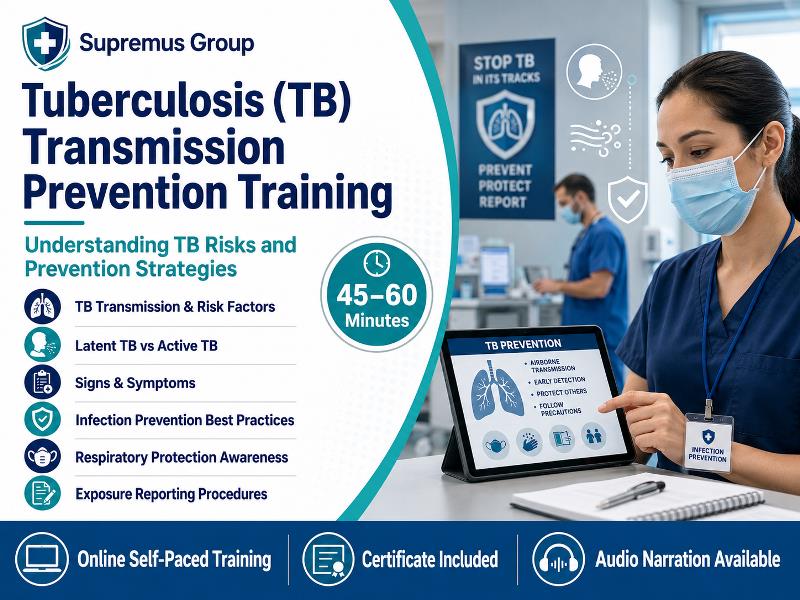
Tuberculosis (TB) remains an important public health concern, particularly in healthcare facilities, community health settings, correctional institutions, and other environments where employees may encounter individuals with active tuberculosis. Understanding how TB spreads and how exposure risks can be reduced is essential for protecting employees, patients, and visitors.
The Tuberculosis (TB) Transmission Prevention Training course provides practical guidance on TB awareness, transmission pathways, workplace prevention measures, and employee responsibilities. Participants learn how infection prevention strategies help reduce exposure risks and support safer workplace environments.
Why TB Prevention Training Matters
Tuberculosis can spread through airborne particles released by individuals with active TB disease. Organizations whose employees may encounter potential exposure situations benefit from training that promotes awareness, encourages safe practices, and supports infection prevention efforts.
Training helps employees recognize potential risks, understand transmission pathways, and follow workplace procedures designed to reduce the likelihood of exposure.
What You’ll Learn
Upon completion of this course, participants will understand:
- The difference between latent TB infection and active TB disease
- How tuberculosis spreads
- Common signs and symptoms associated with TB
- Workplace factors that may increase transmission risks
- Infection prevention and exposure reduction strategies
- Employee responsibilities related to TB awareness and reporting
Course Topics
Key topics covered include:
- Introduction to Tuberculosis (TB)
- TB Transmission and Risk Factors
- Latent TB Infection vs. Active TB Disease
- Signs and Symptoms of TB
- Infection Prevention Best Practices
- Respiratory Protection Awareness
- Exposure Reporting Procedures
- Workplace Safety Responsibilities
Who Should Take This Course?
This training is designed for professionals working in environments where potential exposure to tuberculosis may occur, including:
- Healthcare personnel
- Long-term care employees
- Public health professionals
- Correctional facility staff
- Emergency responders
- Community health workers
- Occupational health teams
Course Details
Training Format: Online Self-Paced Training
Average Completion Time: Approximately 45–60 Minutes
Access Period: 60 Days
Certificate of Completion: Included
Certificate Validity: 2 Years
Audio Narration: Available
Benefits of This Training
Organizations that provide TB awareness training can improve workforce preparedness and strengthen infection prevention initiatives. Training supports employee awareness, promotes safer workplace practices, and helps reinforce organizational health and safety programs.
Frequently Asked Questions
What is tuberculosis (TB)?
Tuberculosis is an infectious disease caused by bacteria that most commonly affect the lungs. It spreads through airborne particles generated by individuals with active TB disease.
What is the difference between latent TB infection and active TB disease?
Individuals with latent TB infection carry the bacteria but do not typically experience symptoms and cannot spread the disease. Active TB disease may cause symptoms and can be contagious.
Who should complete this training?
Healthcare workers, public health professionals, correctional staff, emergency responders, and others who may encounter potential TB exposure situations can benefit from this course.
Does this course provide medical treatment guidance?
No. This training focuses on awareness, transmission prevention, workplace safety, and infection control principles.
Will I receive a certificate?
Yes. Participants receive a certificate of completion after successfully completing the training.
Promote a Safer Environment Through TB Awareness
Provide employees with practical knowledge about tuberculosis transmission, exposure prevention, and workplace safety. Enroll in Tuberculosis (TB) Transmission Prevention Training and support your organization’s infection prevention efforts.