
Prevent Contamination and Support Safe Practices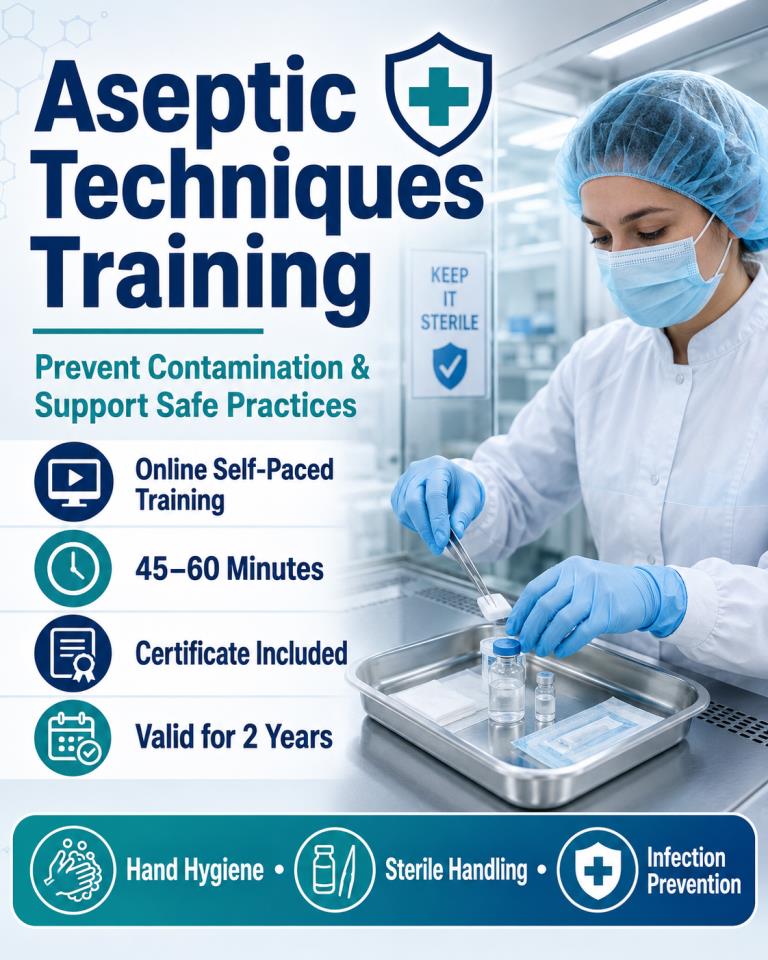
Maintaining a clean and controlled environment is essential in healthcare, laboratory, pharmaceutical, and research settings. Aseptic techniques help reduce the risk of contamination and support the safety of patients, products, and procedures.
The Aseptic Techniques Training course provides practical instruction on contamination prevention, sterile handling practices, and infection control principles. Participants learn how microorganisms spread, how contamination occurs, and how proper procedures help maintain safe working environments.
Why Aseptic Techniques Matter
Contamination can affect patient outcomes, compromise product quality, and create unnecessary risks. Employees who understand aseptic principles are better equipped to follow procedures that protect people, materials, and workplace operations.
Training helps reinforce consistent practices that support safety, quality, and compliance objectives.
What You’ll Learn
Participants will learn:
- Core principles of aseptic technique
- Common sources of contamination
- Hand hygiene best practices
- Sterile field awareness
- Safe handling of sterile supplies
- Infection prevention responsibilities
Course Topics
The course covers:
- Introduction to Aseptic Techniques
- Microorganisms and Contamination Risks
- Hand Hygiene Fundamentals
- Sterile and Non-Sterile Environments
- Personal Protective Equipment (PPE)
- Sterile Supply Handling
- Environmental Controls
- Contamination Prevention Strategies
Who Should Take This Course?
This training is designed for:
- Healthcare professionals
- Laboratory personnel
- Pharmaceutical employees
- Medical device personnel
- Clinical research teams
- Sterile processing staff
- Quality assurance professionals
Course Details
Training Format: Online Self-Paced Training
Average Completion Time: 45–60 Minutes
Access Period: 60 Days
Certificate of Completion: Included
Certificate Validity: 2 Years
Benefits of This Training
Aseptic techniques training helps organizations strengthen infection prevention efforts, improve procedural consistency, and reduce contamination risks. Employees gain practical knowledge that supports workplace safety and operational quality.
Frequently Asked Questions
What are aseptic techniques?
Aseptic techniques are practices used to prevent contamination from microorganisms during procedures and handling activities.
Why are aseptic techniques important?
They help reduce contamination risks, support infection prevention efforts, and maintain safe working conditions.
Who should complete this training?
Healthcare personnel, laboratory workers, pharmaceutical professionals, and employees working in controlled environments can benefit from this course.
Does the training cover hand hygiene?
Yes. Hand hygiene is an important component of aseptic practice and is covered in the course.
Is a certificate included?
Yes. Participants receive a certificate after successful completion.
Strengthen Infection Prevention and Contamination Control
Equip employees with practical knowledge about aseptic techniques, contamination prevention, and safe handling practices through this comprehensive training program.