
Protect Healthcare Workers from Hazardous Drug Exposure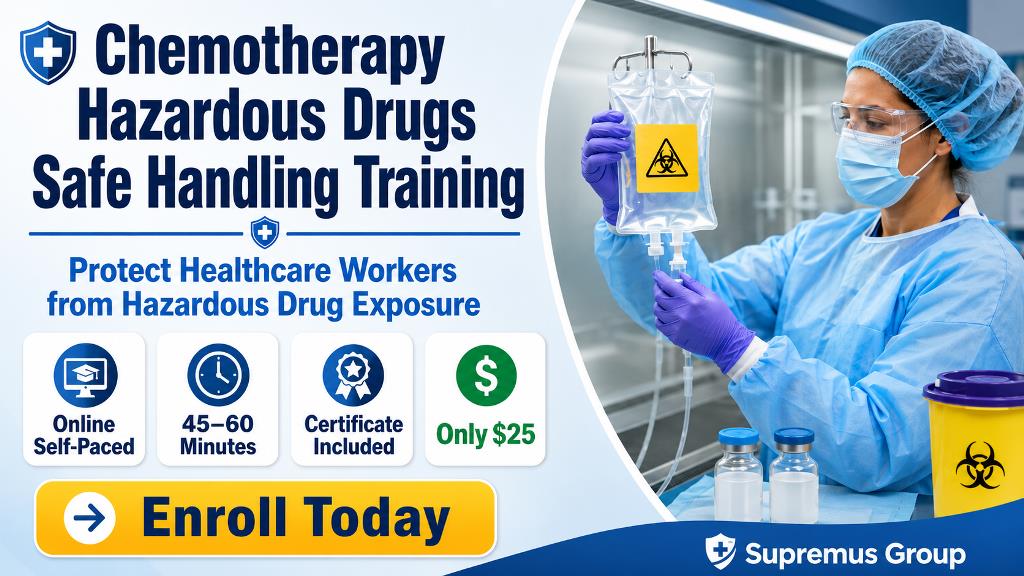
Healthcare professionals who prepare, transport, administer, or dispose of chemotherapy and other hazardous drugs face unique occupational safety risks. Proper education helps reduce accidental exposure while promoting safer handling practices throughout the medication lifecycle.
The Chemotherapy Hazardous Drugs Safe Handling Training course provides practical guidance on hazardous drug awareness, exposure prevention, personal protective equipment (PPE), engineering controls, spill management, waste disposal, and workplace safety responsibilities. The course helps organizations strengthen employee awareness and support safer healthcare operations. Safe handling practices are emphasized throughout the drug handling process to reduce occupational exposure risks.
Why Hazardous Drug Safety Training Is Important?
Chemotherapy agents and many other hazardous medications can present health risks to healthcare workers if they are not handled properly. Employees who understand safe work practices are better prepared to reduce contamination risks and protect themselves, coworkers, patients, and the environment.
Organizations benefit from hazardous drug training by helping employees:
- Recognize hazardous drug exposure risks
- Follow safe handling procedures
- Improve PPE awareness
- Reduce contamination incidents
- Support workplace safety initiatives
- Reinforce safe disposal practices
- Promote a stronger culture of safety
What Participants Will Learn
After completing this training, learners will understand how to:
- Identify hazardous drugs commonly used in healthcare
- Recognize potential exposure routes
- Apply safe handling procedures
- Select and use appropriate PPE
- Reduce contamination during preparation and administration
- Respond appropriately to hazardous drug spills
- Handle hazardous waste safely
- Support workplace safety and compliance efforts
Course Modules
Introduction to Hazardous Drugs
Understand what qualifies as a hazardous drug and why chemotherapy medications require specialized handling practices.
Learning Highlights
- Hazardous drug classifications
- Common healthcare applications
- Occupational exposure concerns
Understanding Exposure Risks
Explore how hazardous drugs may expose healthcare personnel during routine activities.
Topics Include
- Skin contact
- Inhalation risks
- Surface contamination
- Accidental exposure pathways
Safe Handling Procedures
Learn recommended practices for receiving, storing, preparing, transporting, administering, and disposing of hazardous medications.
Topics Include
- Safe workflow practices
- Handling precautions
- Transport considerations
- Administration awareness
Personal Protective Equipment (PPE)
Review the importance of PPE when working with chemotherapy and hazardous medications.
Topics Include
- Gloves
- Protective gowns
- Eye and face protection
- Respiratory protection awareness
- PPE inspection and replacement
Engineering Controls and Safe Work Practices
Understand how designated work areas and engineering controls help reduce occupational exposure.
Topics Include
- Biological safety cabinets
- Closed system transfer devices (awareness)
- Ventilation considerations
- Workplace contamination control
Spill Response and Decontamination
Learn appropriate actions following hazardous drug spills.
Topics Include
- Spill response procedures
- Spill kits
- Area isolation
- Decontamination practices
- Incident reporting
Hazardous Drug Waste Disposal
Review safe disposal practices that help reduce environmental contamination and employee exposure.
Topics Include
- Hazardous waste segregation
- Disposal containers
- Workplace procedures
- Environmental responsibility
Building a Safer Healthcare Workplace
Safe handling practices protect everyone involved in healthcare operations. Consistent training supports a workplace culture where employees recognize hazards, follow established procedures, and contribute to safer patient care environments.
Employees who understand hazardous drug safety are better prepared to:
- Reduce occupational exposure
- Protect coworkers
- Maintain cleaner work environments
- Improve safety awareness
- Support organizational safety goals
Who Should Take This Course?
This course is appropriate for:
- Oncology Nurses
- Infusion Center Staff
- Pharmacists
- Pharmacy Technicians
- Oncology Physicians
- Healthcare Assistants
- Laboratory Personnel
- Environmental Services Staff
- Healthcare Safety Officers
- Occupational Health Teams
- Hospital Support Personnel
- Any employee handling hazardous medications
Course Details
Training Format: Online Self-Paced Training
Estimated Completion Time: Approximately 45–60 Minutes
Access Period: 60 Days
Certificate of Completion: Included
Certificate Validity: 2 Years
Audio Narration: Available
Mobile Friendly: Yes
License Type: Individual User License
Benefits for Healthcare Organizations
Organizations that provide hazardous drug safety education can strengthen workplace safety initiatives while improving employee awareness.
Benefits include:
- Improved workforce preparedness
- Better hazardous drug awareness
- Reduced exposure risks
- Standardized employee education
- Stronger workplace safety culture
- Enhanced employee confidence
- Support for organizational safety programs
Frequently Asked Questions
What are hazardous drugs?
Hazardous drugs are medications that may pose health risks to healthcare workers if they are not handled using appropriate safety procedures.
Is this course only about chemotherapy drugs?
The course focuses on chemotherapy medications while also introducing general hazardous drug safety principles applicable in many healthcare environments.
Who should complete this training?
Healthcare professionals involved in receiving, preparing, transporting, administering, or disposing of hazardous medications can benefit from this training.
Does the course cover PPE?
Yes. Participants learn about appropriate personal protective equipment used when handling hazardous drugs.
Is spill management included?
Yes. The training introduces hazardous drug spill awareness, response procedures, and decontamination concepts.
Is a certificate provided?
Yes. Participants receive a certificate of completion after successfully finishing the course.
Promote Safe Hazardous Drug Handling Across Your Organization
Safe handling of chemotherapy and hazardous medications requires awareness, preparation, and consistent workplace practices. The Chemotherapy Hazardous Drugs Safe Handling Training course helps healthcare organizations educate employees on exposure prevention, PPE, spill response, hazardous waste handling, and workplace safety fundamentals.
Empower your workforce with practical knowledge that supports safer healthcare environments, protects employees, and reinforces a culture of safety.